
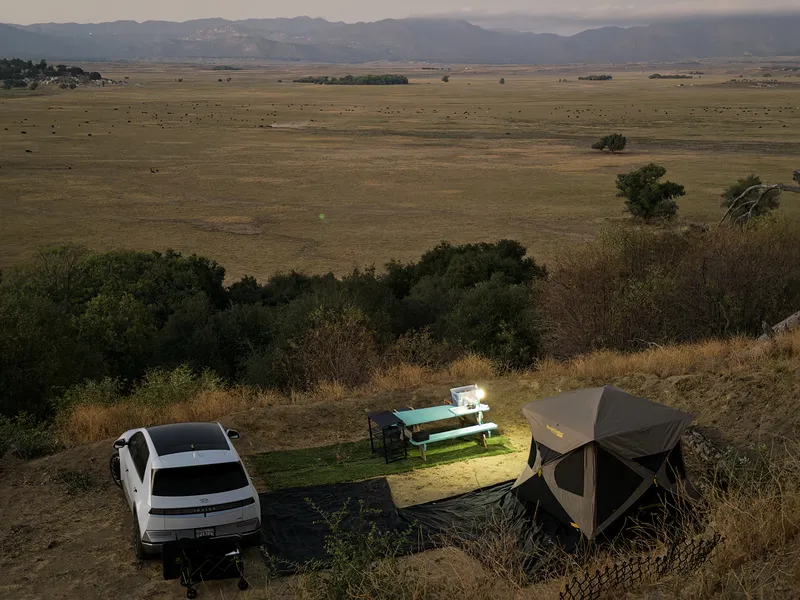
Recently, I’ve been camping quite a bit, once or twice a month. It’s for family logistics reasons, in part, but I’ve found it also really enjoyable. Some folks have been asking about my setup, so I thought it would be worth writing it up to make it easy to share.
Since I’m on the road so much, I considered lots of options, including a larger RV, van, or trailer. Ultimately I’ve been really happy making a much smaller financial investment that’s still super comfortable, flexible, and easy to use. Yes, there’s a lot on this list, but it’s still nothing compared to buying/insuring/maintaining/storing a whole dedicated vehicle.
The modular setup has been a bonus, too – with small variations, a lot of the gear is just as useful for family trips, beach or lake days, or having extra people at the house.
For finding sites, I’ve used all the usual suspects, but for Southern California, Hipcamp has been the most reliable way to get an affordable and quiet spot. A lot of the state and county campgrounds tend to be pretty high density, packed with families or people in party mode, which is not what I’m usually in the market for. Do read the reviews, though – I came pretty close to booking a spot that turned out to be clothing optional. Which is cool, but also, not what I was in the market for, and maybe they should have made that a bit more clear in the listing.
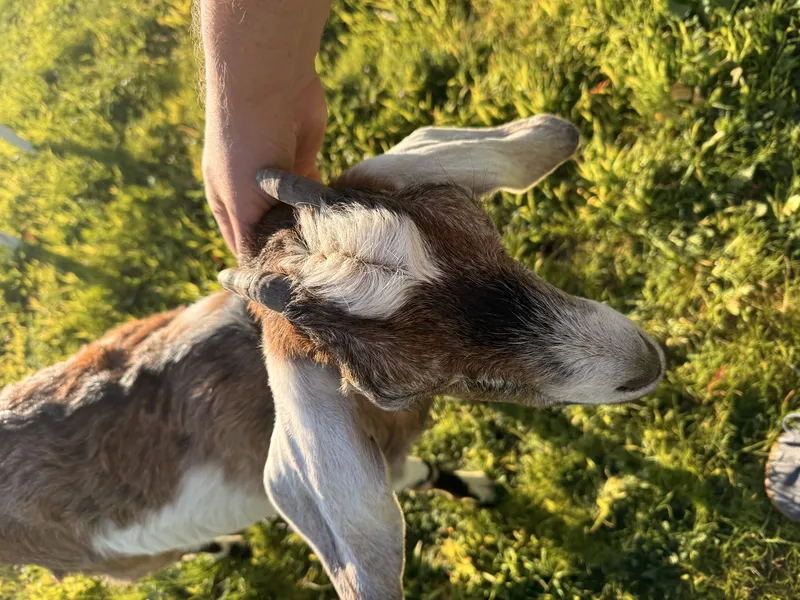
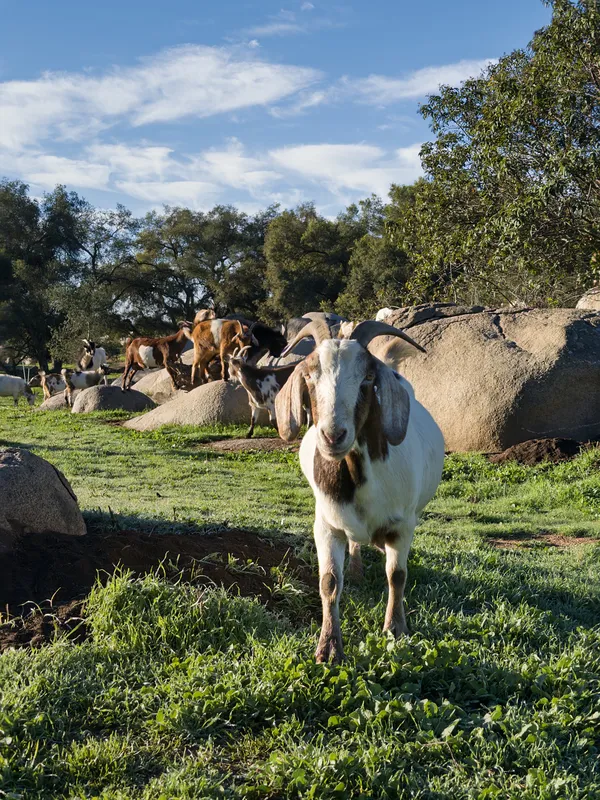
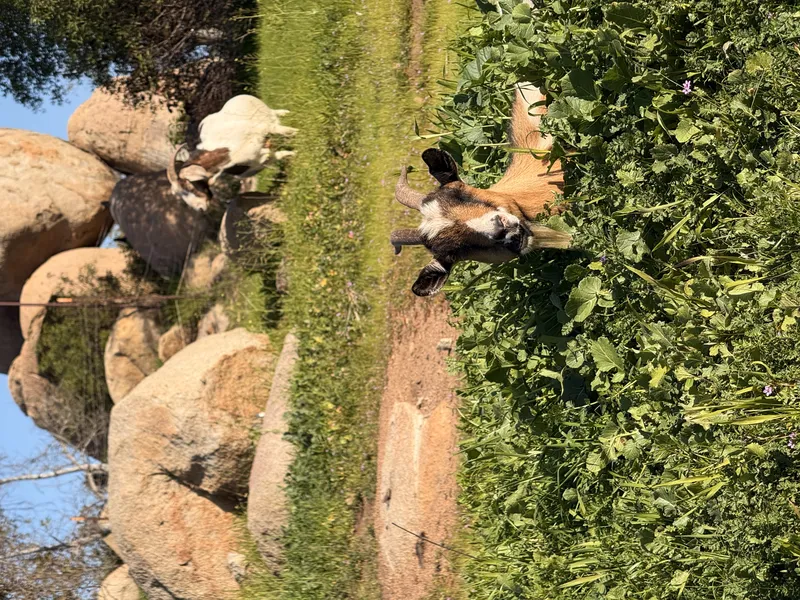
My favorite spot has been Splitrock Farm, where goats and other friendly creatures wander through your campsite looking for snacks and skritches. And every human I’ve seen so far has been sufficiently clothed as to not make it weird.
Gear
A good friend once “saw me” just a bit too well, and observed that I have as much or more fun gearing up for activities as I do actually doing the activities. So yeah, that’s true. But I’m also happy that the set of gear I’m calling out here has been pretty stable, so the ratio isn’t toooooo bad. Still fun to share the list, and I hope some things help you if you’re thinking about spending more time nature-adjacent as well.
I’ll add links to the specific products I’m using when I have them, but please don’t take them as a huge endorsement. (No affiliate links either.) If it’s on the list it means “has been doing a fine job and I haven’t had to replace it yet.”
The MVP: Gear Boxes
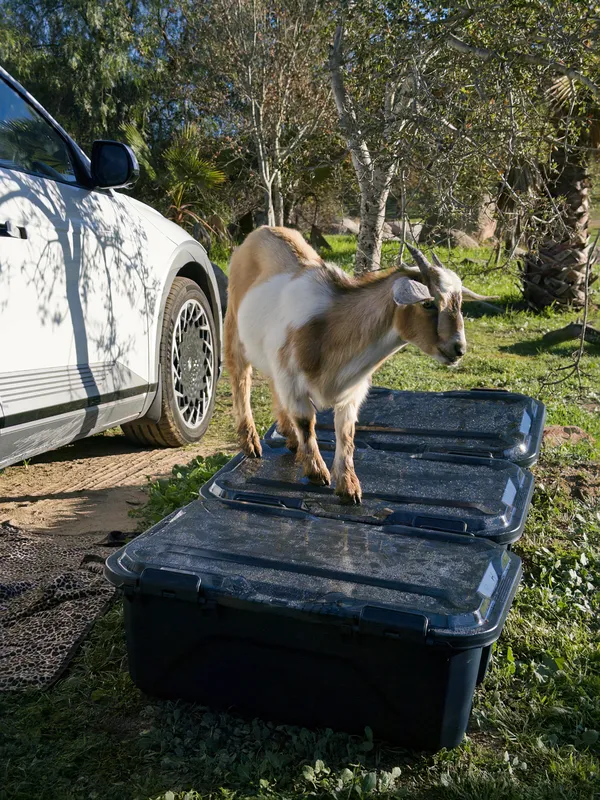
All the small items on this list go into Gregory Alpaca 45L Gear Boxes. They are waterproof, dust proof, well sealed, have see-through lids so you can quickly spot what you’re looking for, open on either side, stack well, and can even handle being jumped on by goats. I have a box for my kitchen gear, a box for my food and pantry items, one for general camp gear and tools, and finally one that lives in my closet upstairs that I use as a ‘suitcase’. I love these things to an almost unhealthy degree.
The Car
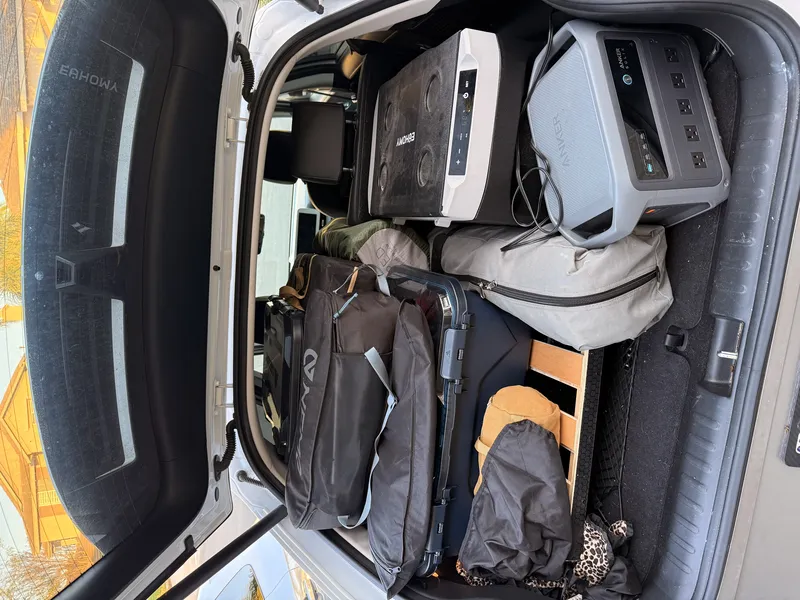
Really, for car camping, the car is pretty important. I have an Ioniq 5, which has been a truly excellent vehicle. As an EV, it has some great superpowers that make it extra nice as the world’s littlest RV:
- It has a ‘utility’ mode, so it can run the lights, AC or heat, and the internal outlets and charge ports while parked.
- It supports a V2L Adapter, so I can plug into the charge port on the outside and get a high-powered outlet for charging devices, cooking, boiling water, and anything else that needs electricity.
As long as I get to camp with sufficient charge, running the EV in utility mode all weekend usually only knocks the battery down by a few percent. It turns out “moving a huge chunk of metal and one or more humans around” takes a lot more energy than most of the things you can do while sitting still.
Sleeping
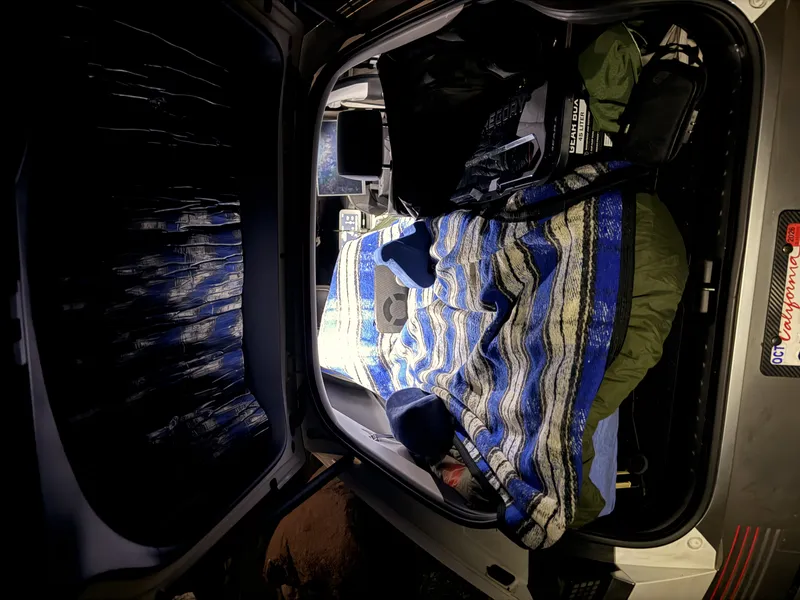
On solo trips, I sleep in my car. It feels just a bit safer to be able to lock the doors at night, and it’s quiet and dark and super cosy.
It’s also great when, because of “having a job”, I end up getting to camp after dark. I can quickly unload my bulky gear, set up the bed in the car, and be ready to sleep in minutes, leaving the rest of camp setup (optionally) for the next day.
I learned the hard way that just folding the seats down and sleeping on them did terrible things to my back as a side sleeper, so I invested in probably the most expensive part of my whole setup: a sleeping platform. There are more affordable options, but I went for the Pioneer Platform. It’s got adjustable legs, and between those and some creative parking, I’ve been able to get a perfectly level bed every time. (Pro tip – the built-in Measure app on an iPhone has a level in it.)
I layer a Z Lite on top of the platform for a bit more squish, then add an Exped Megamat as my main mattress. Sometimes I wake up and genuinely can’t tell if I’m in my car or not. For inflating and deflating the pads (and lots of other tasks), I have a Hoto Multifunction Blower. It’s USB rechargeable, a theme for my setup.
For bedding, I opted for a regular sheet, pillows, and fluffy comforter, as well as a side sleeper prop. I shove all of the bedding into a big water resistant duffel bag, because camping with wet bedding sucks.
To keep the car nice and dark, I cover the dashboard with a microfiber towel, because Hyundai decided in their infinite wisdom not to include an option to turn all of the lights off on the dashboard while in utility mode.
To avoid choking on my own fumes, I got some cheap car window shades that cover the side windows and keep the bugs out while they’re partially open. I’m working on ideas for more active ventilation, but this works for now. I recently got some USB fans that attach to the back of the seat to keep air moving inside the car, but haven’t trip-tested those yet.
For the front and back windows, I ordered specific shades for my car’s windows from Galaxy Auto Shield. They do a great job insulating, and have suction cups to help hold the cover on the back window. The “press fit” ones I started out with kept falling off.
For power inside the car, this Anker Charging Station is compact and covers everything I need for plugging in my beloved Resmed AirMini Travel CPAP (listen, I don’t love having a CPAP, but I do love having “oxygen” at “night”), as well as charging any other electronics at high speed.
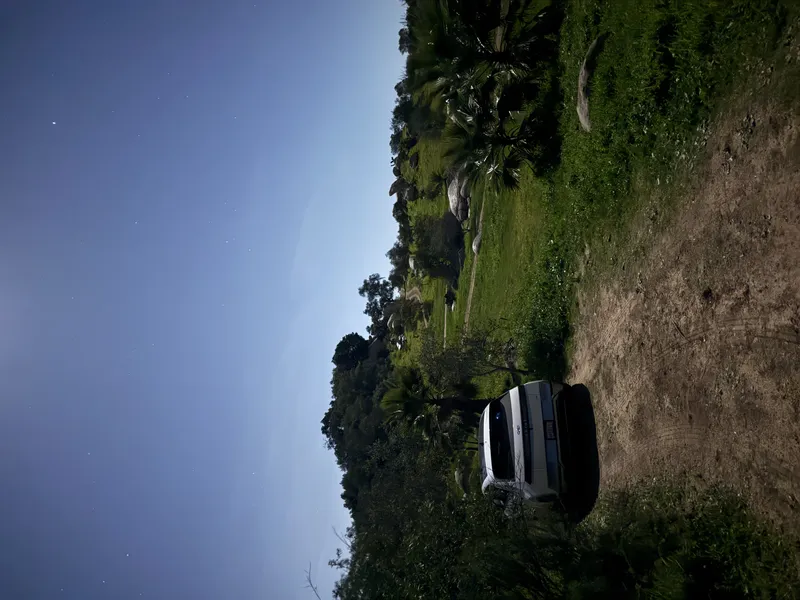
For sitting in the car once it’s too cold, hot, buggy, or loud to be outside, I grabbed this steering wheel desk which is nice for getting laptop-based writing done. I spend most of my time in the passenger-side back seat, though – a miniature living room. That seat has a seat back organizer which keeps everything at hand instead of kicking around on the floor or under the seats.
For reading once I’m tucked in bed, the Flippy tablet holder coupled with a bluetooth keyboard lets me read my Kindle books while my hands stay warm under the blankets. And even though the car has lights inside, I use this inflatable lamp quite a bit – it’s a nice soft light that can be set very warm and not too bright.
Final pro tip – when it’s time to sleep, I use the built-in “dark noise” on my iPhone to help smooth over any of the little normal noises that pop up in camping life.
Shelter and Kitchen
The first thing I usually set up is an extra large tent footprint. It’s just a nice way to keep the rest of the setup process tidy, and limits how dirty tents/shelters get.
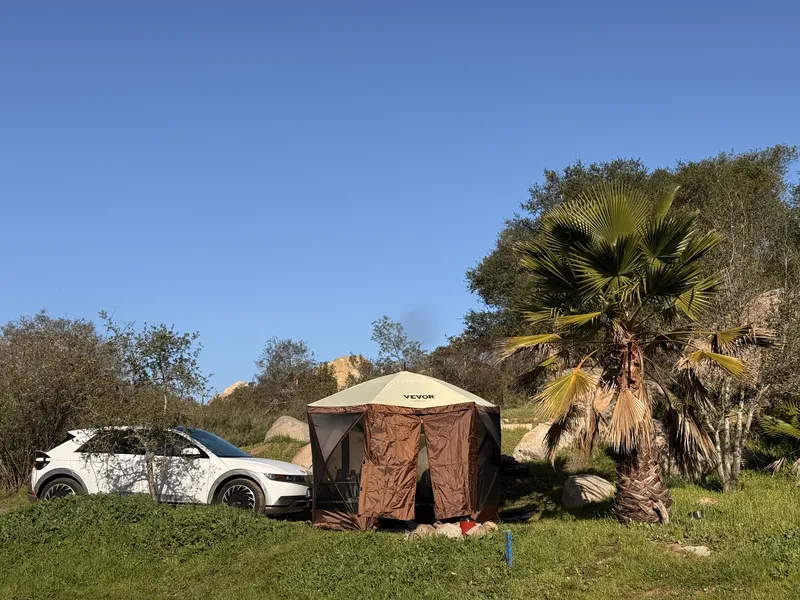
For shelter outside the car, I have a few options that I choose based on the weather, plans, and whether anyone else needs a place to sleep. I’ve had surprisingly good luck with Vevor products, and this shade gazebo has been rock solid. It has a clever design with velcro panels so you can block the sun on whatever sides are getting directly hit while still getting airflow and a view through the others. When I need an extra bedroom, the Fanttik C4 Instant Cabin is great – it pops up quickly and has been sturdy in both high wind and pretty heavy rain. I also picked up an off-brand inflatable tent that I’m going to test on the next trip.
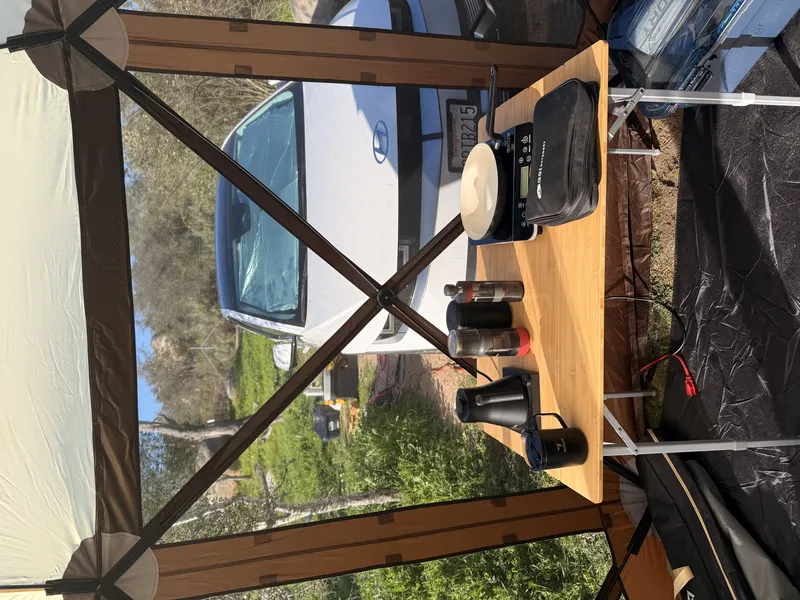
For the kitchen, I use electric appliances, usually via a high-amperage extension cord running back to the car.
- A cheapie 12V cooler, which means no ice or ice packs, and things don’t get sweaty/wet just to stay cold.
- An induction cooktop and induction-capable cookware
- A generic electric kettle
An Anker Solix 1,024Wh Power Station handles running the cooler all weekend and charging things inside the tent/shade area, and I can quickly recharge it from the car if needed. It means I don’t need to keep the V2L port plugged in all the time, and I only have to leave the car in utility mode when I’m actually sleeping in it.
The base of the kitchen is this Folding Bamboo Table. Bamboo is maybe a weird choice, but it’s a pleasant surface to work on and it has a gear net underneath to stash things when I’m not actively using them.
There’s nothing too special about the rest of the camp kitchen, but I have found a few nice hacks:
- Collapsible Water Jugs – easy to haul and fill, and they don’t take up space once they’re empty.
- When the water sources at camp are a bit questionable (or when traveling in other countries), the GeoPress Water Purifier Bottle is a recent addition to the kit. It filters out pretty much everything that will ruin your vacation.
- A Folding Kitchen Knife. For years I have had regular chef’s knives with those covers that always fall off, or get a little nasty inside. This is basically a giant pocket knife that stores easily and keeps the sharp parts hidden until I want them.
- The Oxo Rapid Brewer. It’s cheaper than an Aeropress and I (don’t shoot me) actually like the coffee better. I have the companion burr grinder, which I don’t recommend – there are better options, or I’m using it wrong.
- For dishes, I have a collapsible bucket, but more often than not I use a hack I learned from another car camper – cheap spray bottles, one with camping soap and water in it, one with plain water. For things that aren’t super messy, I’ll spray with the soap, wipe it down, spray with the rinse, wipe it down, done.
Living in Camp
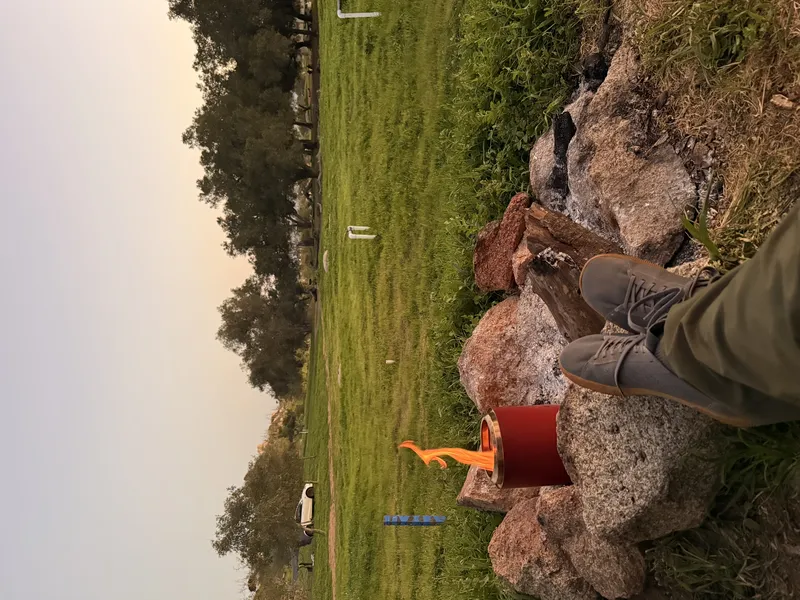
I try and spend as much time as I can during the daylight outside. You know, the whole point of camping. But also, my genetics require I not spend too much time in the full sun.
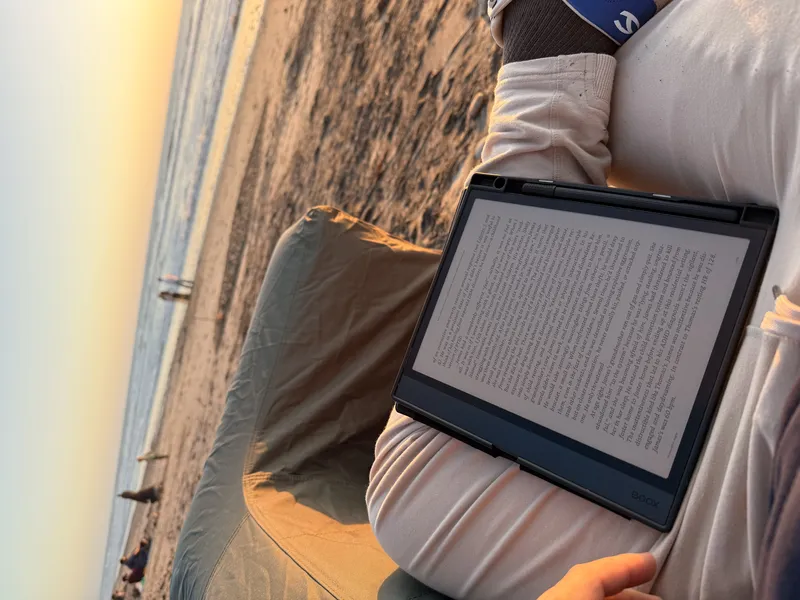
For seating, I’ve had a Nemo Stargaze for close to 10 years, and it’s the most comfortable camp chair I’ve tried. A recent upgrade is the Slouch Couch, an inflatable couch with a fabric cover and built-in rechargeable pump – which is also a great way to meet strangers on the beach. I wish it had a slightly higher back, but it’s still pretty cool. A folding footstool rounds out the seating as a great utility player – handy while organizing gear bins, starting the fire, or just putting your feet up. And this style of portable fan is a huge quality of life improvement when you’re in the shade but the breeze is not breezing.
While a lot of what I go to nature for is to avoid screens, the devices are where I keep a lot of my interests. And my whole library. Reading a book in the middle of a meadow is a pretty great way to spend an afternoon. Luckily, there’s rarely cell service, or it’s iffy, so I’m stuck with things I already downloaded or am creating. I’m a little obsessed with e-ink devices, so you’ll probably find me reading or writing on a BOOX Note. It works great in full sun, is gentle on the eyes, is backlit for evenings and nights, and the pencil makes it a solid journal and sketchpad. I use the same tablet floor stand that serves as my music stand when playing gigs to hold the tablet at eye level, with a small folding bluetooth keyboard to change pages.
For keeping myself clean while out and about, I have two more USB-C devices that shoot water and make camping just a bit more civilized: a portable bidet and a mini water pik.
On the horizon
With things heating up again, I’ve ordered a small portable tent-scale AC unit, and I’m curious to see how it works and how much power it drinks. But other than that, I’m more than thrilled with this setup. I’ve started to feel almost homesick for nature when I go too long between trips.